
Welcome to SHWEC’s Blog

Welcome to the Solid & Hazardous Waste Education Center’s Blog. SHWEC staff post information and updates related to the center’s programs and areas of expertise. This is where we share information, resources and other items in a timely manner. Please consider subscribing to either our RSS feed or use the Subscribe 2 function. These tools allow posts to this site to be sent directly to you.

Also, please be sure to visit our traditional WEBSITE to learn more about SHWEC programs and review our many PUBLICATIONS.

16th Annual P2 Convention – September 25-26, Indianapolis

16th Annual Pollution Prevention Conference and Trade Show, Sept 25-26, 2013 in Plainfield, Indiana. This will be NPPR’s annual conference this year. The conference agenda (see attached) includes workshops, panels, and presentations from national and local speakers regarding pollution prevention, sustainability, and environmental stewardship. The conference will provide excellent networking and learning opportunities. We hope that you will share this information with your colleagues. Due to the growing interest in pollution prevention across the country and beyond, this year the conference will be a two-day event as NPPR joins forces with the Indiana Partners for Pollution Prevention, including a GreenScreen training.
Pollution Prevention Conference Agenda: 2013 Pollution Prevention Conference Agenda – Final

Visit http://www.in.gov/idem/ppp/2334.htm for more details. 2013

You can also visit www.partners2013conference.eventbrite.com or contact Rachael Yanni at RYanni1@idem.IN.gov or (317)234-4053 for more information.

PCBs in Pigments – Green Chemistry Webinar

Advancing the design of PCB free pigments is a goal for the green chemistry community to help transition from research to development to market. Join this webinar to learn about the issues related to the inadvertent production of PCBs in pigments. This Webinar is hosted by the Washington State Department of Ecology and the National Pollution Prevention Roundtable.

Webinar Title: Advancing Green Chemistry: PCBs in Pigments

Date: Thursday, June 27, 2013, noon eastern

Presenters: Dr. Lisa Rodenburg, Rutgers University
Adriane Borgias, Washington State Department of Ecology Dr. Robert Christie, Heriot-Watt University, Galashields, Scotland

Registration: https://attendee.gotowebinar.com/register/3838278894993253632

Description: The purpose of this session is to provide historical and regulatory context to the issue, describe the changes, challenges, and solutions needed for effective source control of PCB. The goal is to provide insight into the design of PCB free pigments that meet green chemistry principles, and to outline a transition path from research to development to market: the mechanisms, barriers, and implementation.The challenge of reducing Polychlorinated Biphenyls (PCBs) at the source is a national, even global issue as PCBs are globally transported, do not easily degrade, and bioaccumulate in the food chain. PCBs are ubiquitous in the environment, not only as the result of legacy uses of Aroclors but, significantly, from residual PCBs that are still being legally produced as “inadvertent contaminants” in industrial processes. A specific example is PCBs in pigments used in inks, dyes, and other products.

Background information: http://scienceblogs.com/thepumphandle/2013/03/27/are-manufacturing-by-product-pcbs-an-occupational-health-hazard

Sign up by August 1 to join the Safer Chemistry Challenge Program at no cost!
The National Pollution Prevention Roundtable invites companies to join the 2025 Safer Chemistry Challenge Program (SCCP). The objective of this voluntary initiative is to motivate, challenge, and assist businesses in reducing their use of chemicals of concern to human health and the environment. The SCCP will also recognize and reward companies for finding safer alternatives to the hazardous chemicals they currently use. For information on how to become a member of the Safer Chemistry Challenge program visit www.p2.org/challenge. Facilities in the Great Lakes region can join the program at no cost for one year under the current EPA grant.

Questions can be directed to saferchemistry@gmail.com.

Revisions Coming For ASTM Resin Codes

This week ASTM announced changes to the system long used to identify plastic resins used to manufacture packaging and other goods. The chasing arrow symbol with a number 1-7 currently in use has caused significant confusion by the public looking to recycle their plastic goods. The new system will replace the chasing arrow with a solid equilateral triangle. The entire press release can be found here: http://www.astmnewsroom.org/default.aspx?pageid=3115

Minnesota Bans Toxic Asphalt Sealcoats

Minnesota has enacted a ban on the sale and use of coal tar-based asphalt sealcoats, effective January 2014 (see text below). This action brings the entire state into compliance with coal tar seal coat bans already in place in 28 Minnesota communities.

 SHWEC has created an educational series on asphalt sealcoats, to help guide Wisconsin citizens and communities on choosing safer asphalt sealcoats:

 Coal Tar-Based Asphalt Sealcoats – A Health and Environmental Hazard

 Keeping Coal Tar Out of School Yards

 Avoiding High Costs from Stormwater Sediment Contaminated by Coal Tar-Based Sealcoats

 Avoiding Coal Tar-Based Asphalt Sealcoats

 Choosing a Coal Tar-Free Sealcoat

Minnesota HF 1183

Sec. 17. [116.202] COAL TAR SEALANT USE AND SALE PROHIBITED.

1. Definitions. The following terms have the meanings given (a) “Coal tar sealant product” means a surface applied sealing product containing coal tar, coal tar pitch, coal tar pitch volatiles, or any variation assigned the Chemical Abstracts Service (CAS) numbers 65996–93–2, 65996-89-6, or 8007-45-2. (b) “Commissioner” means the commissioner of the Pollution Control Agency.

 2. Use prohibited. Except as provided in subdivision 4, a person shall not apply coal tar sealant products on asphalt-paved surfaces.

 3. Sale prohibited. Except as provided in subdivision 4, a person shall not sell a coal tar sealant product that is formulated or marketed for application on asphalt-paved surfaces.

 4. Exemptions. The commissioner may exempt a person from this section if the commissioner determines that one or both of the following apply: (1) the person is researching the effects of a coal tar sealant product on the environment; or (2) the person is developing an alternative technology and the use of a coal tar sealant product is required for research or development. A request for exemption must be made to the commissioner in writing including an explanation of why the exemption is needed for research, or the development of an alternative technology.

 5. Compliance and enforcement. Local units of government may adopt by reference and enforce the provisions of this section. The commissioner may provide technical support to local units of government for compliance and enforcement of this section. The commissioner may respond to compliance and enforcement cases transcending jurisdictional boundaries, cases requiring statewide corrective actions, or requests for assistance or referral from local units of government.

 EFFECTIVE DATE. This section is effective January 1, 2014

Pollution Prevention (P2) Awards Competition

Each year the National Pollution Prevention Roundtable presents awards (MVP2 awards) to recognize outstanding pollution prevention achievement over the past           year(s). Four categories of awards are presented:

Best project/program

Best multimedia

Best P2 champion

Best P2 volunteer


This competition is open to all stakeholders (industry, government, non-profits, etc), and the application deadline is July 1, 2013. Click here for further information.


Market update for Recycled Steel

Recycling Today is one of the recycling industries trade journals and often has a number of great articles. A recent article, Smaller Portions, provides an update on the state of the ferrous scrap market that is worth checking out.

www.recyclingtoday.com/rt0513-ferrous-scrap-recyclers-focus.aspx

SHWEC Launches Update Compost Facility List

For a number of years SHWEC has maintained a listing of Wisconsin’s compost sites. We compiled the list based upon the Wisconsin DNR’s list of licensed facilities as well as staff knowledge of other compost sites that do not require a state license. The update includes a map to help users find a nearby site more quickly than in the past. If you operate a compost facility and it is not on the list please send us an email or give us a call and we will correct the oversight. www4.uwm.edu/shwec/compostFacilities/compost.cfm

Manure Spraying to Get Sniff-Test

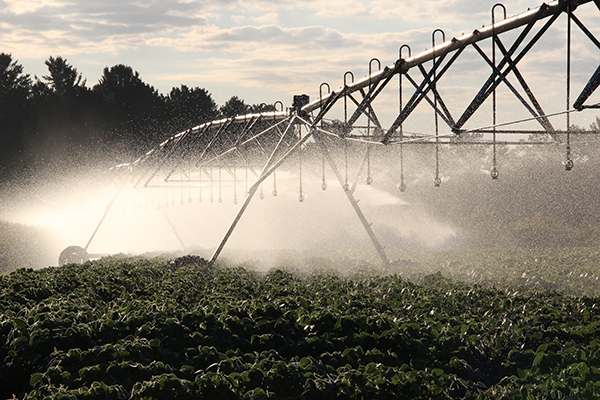
A Manure Irrigation Workgroup is convening in 2013. The workgroup will review issues and develop guidance on the practices of applying livestock manure or process wastewater through irrigation equipment – referred to as “manure irrigation.”

Before the workgroup formally convenes, it will host two public research symposia to share information about benefits, concerns, and related issues associated with manure irrigation.

These public research symposia are intended to do the following:

1) Establish a common basis of information for workgroup participants and other interested stakeholders;

2) Identify the set of issues for the workgroup to address.


The dates and locations for those meetings are -

May 9, 2013, 9am-1pm – Stevens Point, Wisconsin (UW Stevens Point)
Dreyfus University Center, Alumni Room, 3rd floor, UW Stevens Point, 1015 Reserve St, Stevens Point, WI 54481

May 17, 2013, 9am-1pm – Menasha, Wisconsin (UW Fox Valley)
Union Room, UW Fox Valley, 1478 Midway Rd, Menasha, WI 53942

Please click here  if you plan to attend either meeting (to ensure adequate space)

More details about the workgroup and the symposia (including directions) are available at the Workgroup website, here:
http://fyi.uwex.edu/manureirrigation/

EPA Offers webinar on funding for climate adaptation

Climate Change Adaptation for State and Local Governments: Attracting Funding for Adaptation

May 1, 2013
Webinar, 12-1:30 CDT

Governments, hosted by EPA’s State and Local Climate and Energy Program. The series will bring together state and local stakeholders from a variety of sectors to offer examples and solutions to some of the most pressing challenges to implementation — how to achieve buy-in, how to overcome the uncertainty barrier, and how to attract funding. Participants should come away from the series with an understanding of why adaptation to climate change is critical, the current state of the field as it applies to states and communities, how to scale programs to meet local needs, and what actions can be taken at the state and local levels to build support for adaptation and increase community resilience. This webinar will focus on how to secure funding for adaptation. The presentations will provide examples of how communities of various sizes have attracted funding and provide available resources for participants to identify appropriate funds. The experts who present on this webcast will discuss how to maximize funding by mainstreaming adaptation planning and how to simultaneously address adaptation and mitigation.


EPA: Hazard Chemical Asssessments

EPA announced the chemicals it will begin assessing  in 2013. These include 20 flame retardant chemicals and three other non-flame retardant chemicals. Most of these flame retaredants  have never been assessed for safety.

As part of EPA’s comprehensive approach to enhance the Agency’s existing chemicals management program, in March 2012, EPA identified a work plan of 83 chemicals for further assessment under the Toxic Substances Control Act (TSCA). EPA identified seven of these chemicals for risk assessment in 2012.  Read more……


Solid & Hazardous Waste Education Center News is part of the UW Cooperative Extension For Your Information Network. Protected by Akismet. Blogging software based on WordPress.
© Board of Regents of the University of Wisconsin System | Terms of Use | Privacy Policy